Automotive · functional safety and cybersecurity
Functional safety and TARA for automotive programs
Automotive functional safety teams need more than a spreadsheet for HARA, TARA, safety goals, requirements, review status, and traceability. ISO 26262 programs depend on clear item context, structured hazard analysis, defensible ASIL reasoning, and a reliable connection from approved analysis to downstream safety requirements.
The challenge
The automotive safety challenge
Road-vehicle programs create large amounts of safety and cybersecurity evidence across systems, suppliers, and review cycles. Without a controlled workflow, hazards, threats, safety goals, cybersecurity goals, requirements, and approvals drift apart.
With ASF Core
How Aegis SafeForge helps
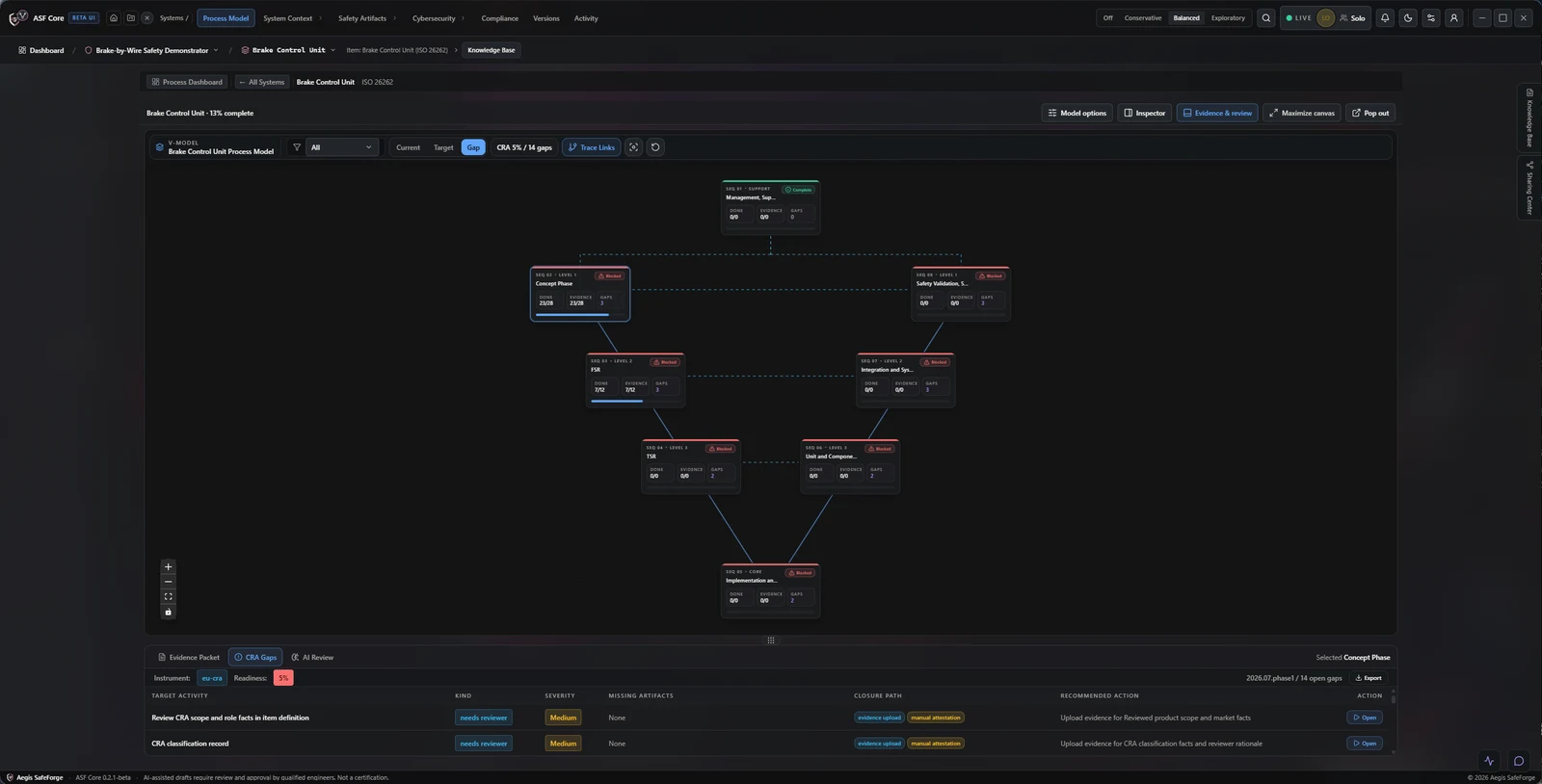
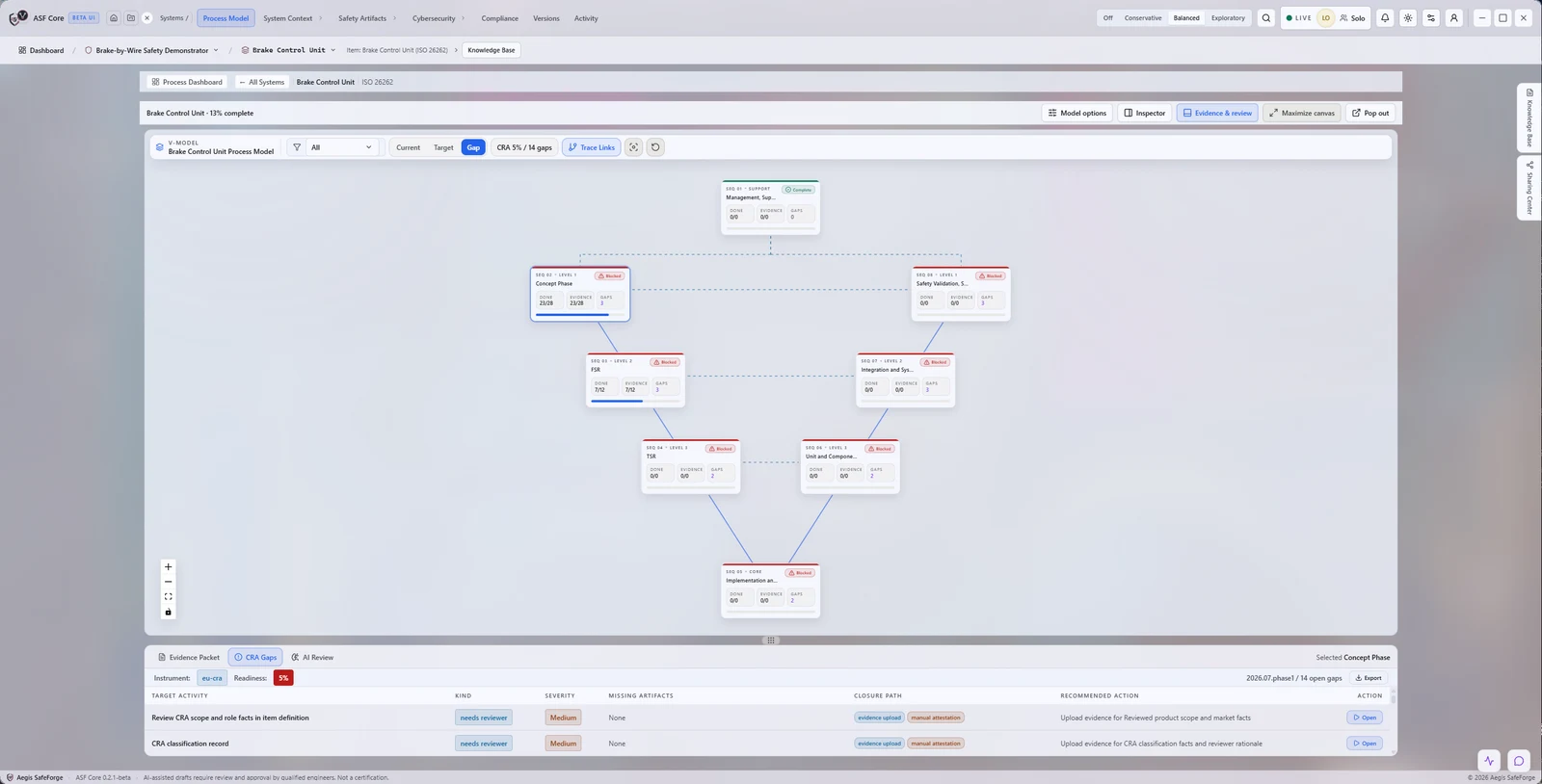
Aegis SafeForge gives automotive teams an AI-assisted workflow platform for HARA, TARA, requirements traceability, artifact generation, review control, and audit-ready evidence. It is designed for teams that need speed without losing engineering accountability.
- Generate first-pass HARA and TARA records from project context while keeping human review mandatory.
- Connect hazards, threats, safety goals, cybersecurity goals, requirements, controls, and evidence in one traceable workflow.
- Give safety managers a clearer view of review queues, ownership, approval state, and export-ready work products.
Industry profile in ASF Core
- AutomotiveISO 26262 · ISO/SAE 21434HARA, safety concepts, FMEA and TARA
FMEDA captures inputs and external analysis references; ASF does not calculate PMHF. The value is shown as not computable, with the reason. Safety case, confirmation review, functional safety audit and assessment, configuration baseline and safety release are available as manually maintained work products, without AI generation. Supplier, tool-confidence, reuse and field records support recording and review, without automated qualification or release. Industry profiles do not imply certification or tool qualification.
Supported automotive workflows
Item definition · HARA · Safety goals · TARA · Requirements traceability · Review and approval
FAQ
Frequently asked questions
What is an ISO 26262 software tool?
An ISO 26262 software tool helps engineering teams structure, review, trace, and manage safety work products such as item definitions, HARA records, safety goals, and requirements.
Does Aegis SafeForge replace the safety engineer?
No. Aegis SafeForge is designed for AI-assisted drafting and workflow control. Engineering judgment, review, and approval remain with qualified human reviewers.
Can Aegis SafeForge support HARA and TARA together?
Yes. Aegis SafeForge supports safety and cybersecurity workflows so teams can manage HARA, TARA, goals, requirements, controls, and traceability in one platform model.
Who is ASF Core for in automotive?
It is for OEMs, Tier 1 suppliers, startups, consultants, and engineering teams working on road-vehicle functional safety and cybersecurity programs.
What makes Aegis SafeForge different from spreadsheet-based HARA?
Aegis SafeForge keeps review state, ownership, audit history, and downstream artifact links visible instead of scattering decisions across disconnected tables and meetings.
Compare ASF Core with your current process.
Bring one real bottleneck: HARA, TARA, traceability or evidence. We will show how ASF Core fits your process.