Standard · ISO/SAE 21434
TARA software for automotive cybersecurity to ISO/SAE 21434
ISO/SAE 21434 introduces cybersecurity engineering expectations for road-vehicle systems, including asset identification, threat scenarios, attack paths, risk determination, cybersecurity goals, requirements, controls, and evidence. TARA work is hard to govern when analysis, decisions, and follow-on controls are scattered.
The challenge
The ISO 21434 workflow challenge
Cybersecurity risk work must connect assets, damage scenarios, threat scenarios, attack feasibility, impact, goals, requirements, and controls in a way that remains reviewable as the program changes.
With ASF Core
How Aegis SafeForge helps
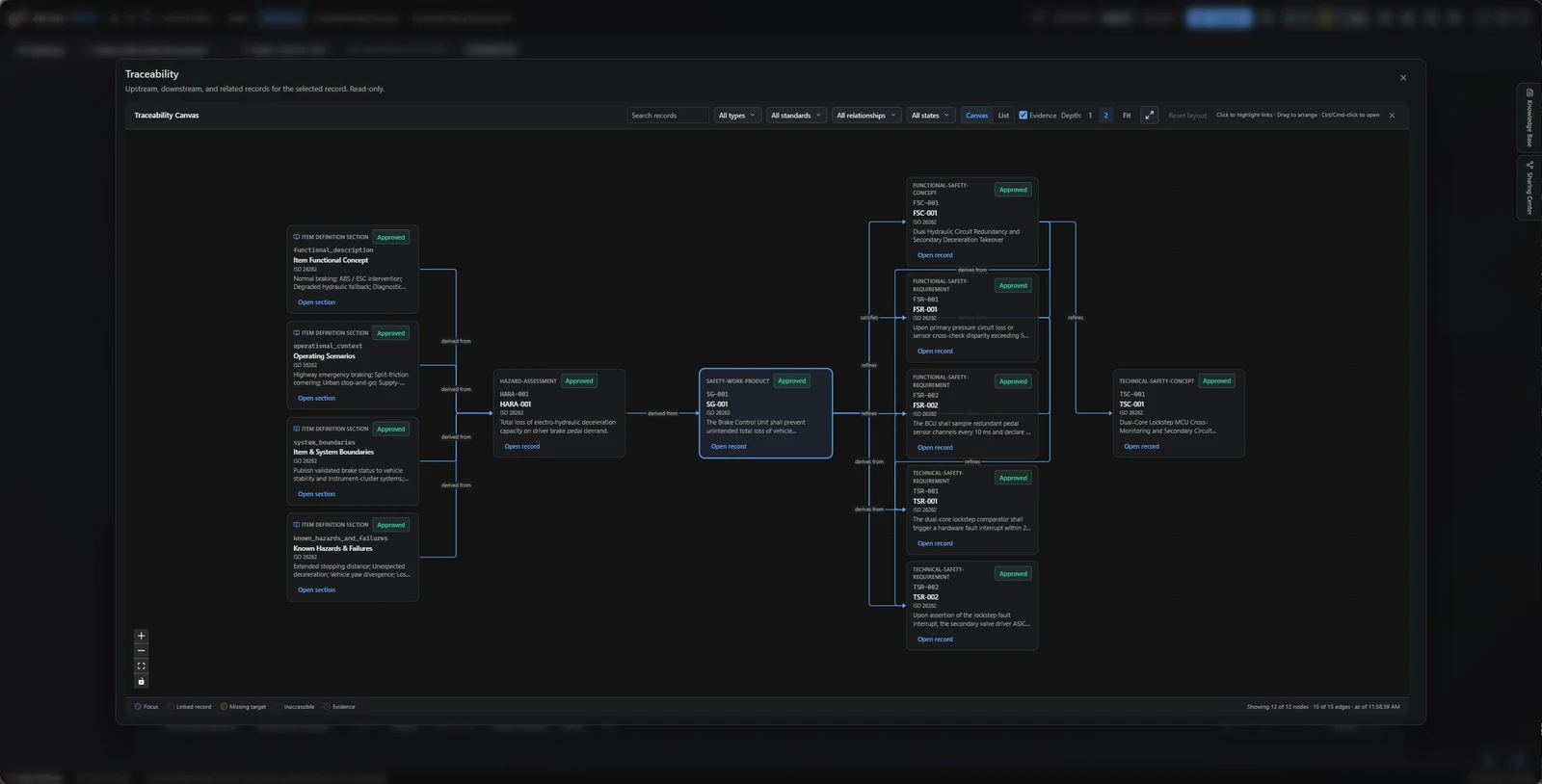
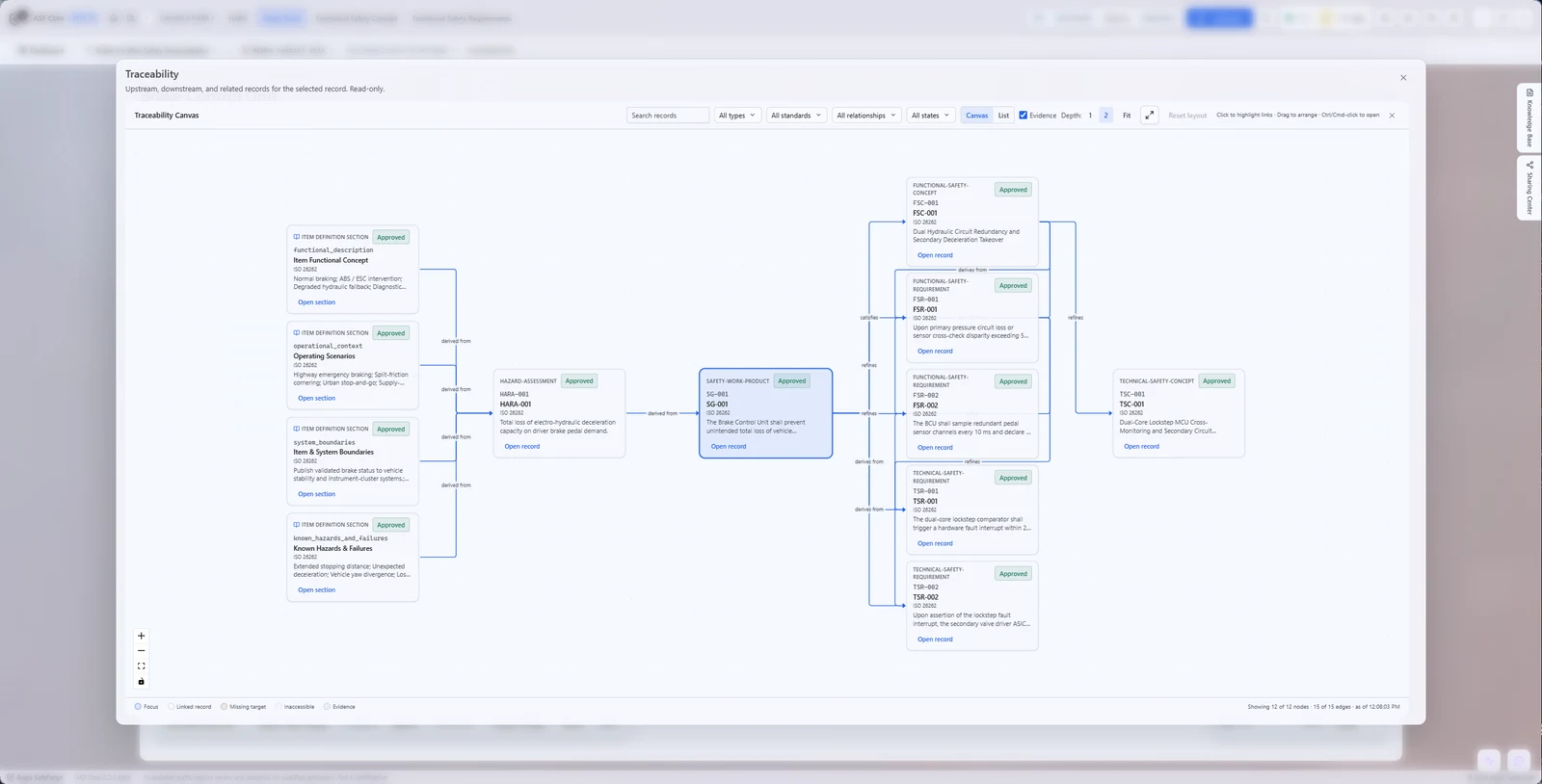
Aegis SafeForge helps teams manage TARA and cybersecurity engineering workflows alongside functional safety work, giving reviewers clearer traceability from assets and threats to goals, requirements, controls, claims, and evidence.
- Structure TARA records with review status, ownership, and traceability.
- Connect approved cybersecurity decisions to goals, requirements, claims, controls, and validation evidence.
- Support safety and cybersecurity teams working in the same product context.
Methodology
ISO/SAE 21434 methodology supported by the workflow
Aegis SafeForge structures cybersecurity engineering work so TARA decisions remain explainable, reviewed, and connected to downstream controls and evidence. It supports engineering governance and does not automate final cybersecurity judgement.
- 01
Cybersecurity context and asset model
Capture the item context, assets, interfaces, dependencies, assumptions, damage scenarios, and referenced engineering documents.
- 02
Threat scenarios and attack paths
Draft threat scenarios, attack paths, impact and feasibility rationale, risk records, and cybersecurity goals with review gates.
- 03
Requirements, controls, and claims
Link approved risks to cybersecurity requirements, controls, claims, verification evidence, vulnerability handling, and incident-response evidence.
- 04
Governed TARA traceability
Maintain ownership, review status, change history, source references, and export-ready evidence so cybersecurity decisions remain auditable.
Industry profile in ASF Core
- AutomotiveISO 26262 · ISO/SAE 21434HARA, safety concepts, FMEA and TARA
FMEDA captures inputs and external analysis references; ASF does not calculate PMHF. The value is shown as not computable, with the reason. Safety case, confirmation review, functional safety audit and assessment, configuration baseline and safety release are available as manually maintained work products, without AI generation. Supplier, tool-confidence, reuse and field records support recording and review, without automated qualification or release. Industry profiles do not imply certification or tool qualification.
ISO 21434 workflows
Asset analysis · Threat scenarios · Attack paths · Risk records · Cybersecurity goals · Controls and claims
FAQ
Frequently asked questions
What is ISO/SAE 21434?
ISO/SAE 21434 is a road-vehicle cybersecurity engineering standard for managing cybersecurity risk across the lifecycle.
What is TARA?
TARA stands for threat analysis and risk assessment. It identifies assets, threats, attack paths, risks, and cybersecurity objectives.
Can Aegis SafeForge support ISO 26262 and ISO 21434 together?
Yes. Aegis SafeForge is designed for safety and cybersecurity workflows that share project context, review control, and traceability.
Does Aegis SafeForge automate cybersecurity decisions?
No. It assists with drafting and structuring, while cybersecurity engineers review and approve risk decisions.
Why does TARA need traceability?
Traceability links threats and risks to goals, requirements, controls, validation evidence, and review decisions so the cybersecurity case is easier to defend.
Compare ASF Core with your current process.
Bring one real bottleneck: HARA, TARA, traceability or evidence. We will show how ASF Core fits your process.