Railway · RAMS and safety assurance
Railway RAMS and safety assurance software for EN 50126 / IEC 62278
Railway safety programs need structured hazard analysis, RAMS evidence, requirements traceability, and review workflows that match rail terminology and lifecycle expectations. EN 50126 and IEC 62278 work is difficult to manage when hazard logs, system definitions, review decisions, and evidence live in disconnected files.
The challenge
The railway safety challenge
Rail programs require long-lived evidence, structured hazard logs, traceable requirements, and coordination across systems, suppliers, assessors, and operators. Tooling must preserve context and decisions over time.
With ASF Core
How Aegis SafeForge helps
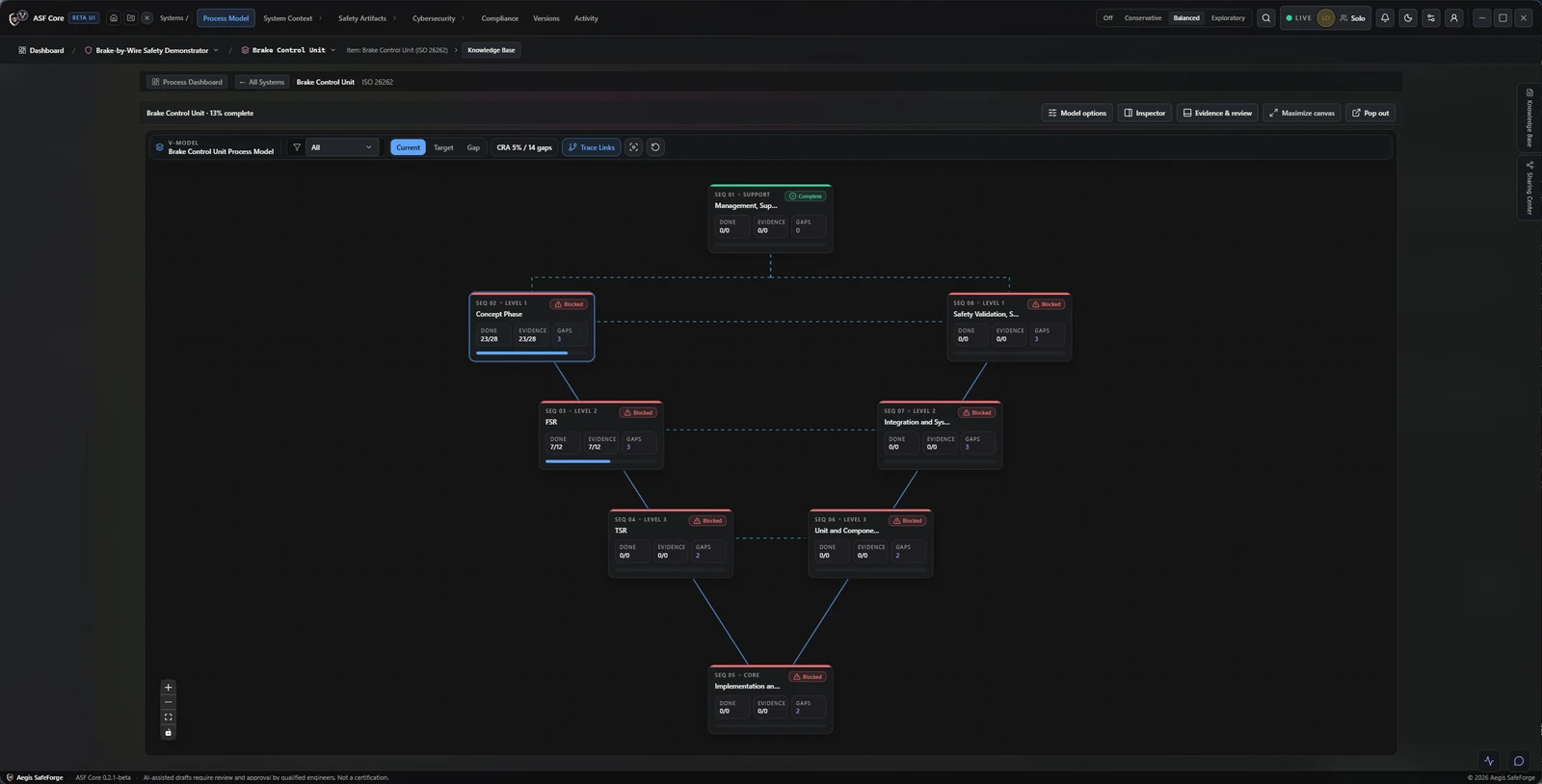
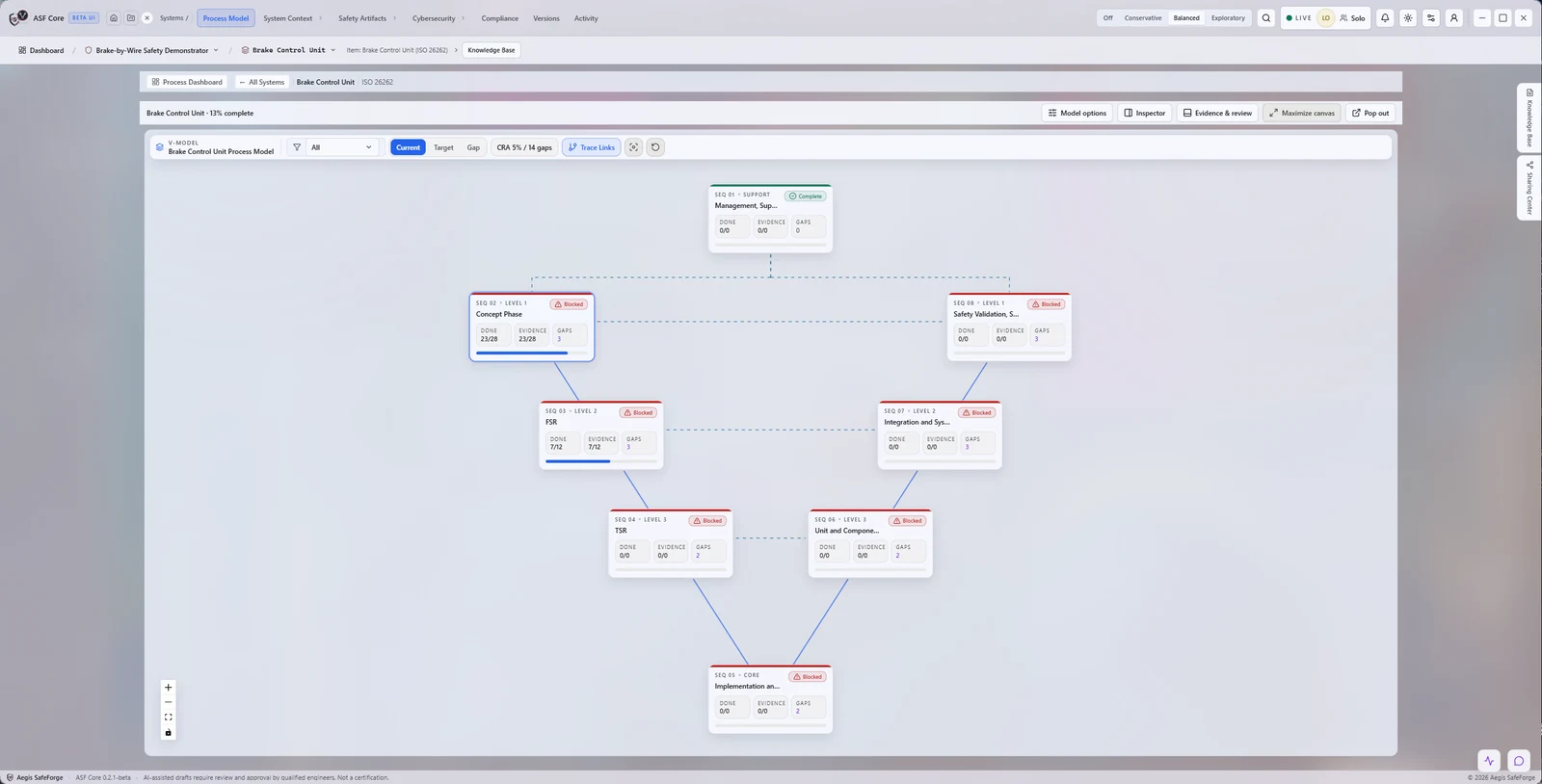
Aegis SafeForge provides a governed workflow foundation for railway functional safety software, helping teams manage hazards, risk analysis, requirements, evidence, approvals, and traceability with AI-assisted drafting and human review.
- Structure railway hazard and risk records with consistent review state and ownership.
- Plan RAMS work with RAMS plans, RAM targets and demonstrations, and carry safety-related application conditions (SRAC) through to the safety case.
- Link safety analysis to requirements, evidence, approvals, assessment and acceptance records, and exportable work products.
- Support manager oversight across project portfolios and review queues.
Industry profile in ASF Core
- RailwayEN 50126 / IEC 62278 · EN 50128 · EN 50129 / IEC 62425 · CLC/TS 50701RAMS, hazard logs, safety cases and assurance
FMEDA captures inputs and external analysis references; ASF does not calculate PMHF. The value is shown as not computable, with the reason. Safety case, confirmation review, functional safety audit and assessment, configuration baseline and safety release are available as manually maintained work products, without AI generation. Supplier, tool-confidence, reuse and field records support recording and review, without automated qualification or release. Industry profiles do not imply certification or tool qualification.
Supported railway workflows
System definition · RAMS plan and RAM targets · Hazard log · Safety requirements and SRAC · Safety case · Assessment and acceptance records
Continue reading
FAQ
Frequently asked questions
What is railway functional safety software?
Railway functional safety software helps teams manage hazard analysis, risk controls, safety requirements, evidence, approvals, and traceability for rail programs.
Does Aegis SafeForge support EN 50126 terminology?
Yes. The railway profile uses rail work products (RAMS plan, hazard log, SRAC and safety case), a railway lifecycle with evidence gates, and independent review for the roles that require it.
Can Aegis SafeForge manage a hazard log?
Yes. The hazard log carries review status, ownership, evidence links and traceability to safety requirements.
Is Aegis SafeForge only for automotive?
No. ASF Core supports automotive, railway, medical devices, process industry and aviation, each with its own industry profile.
How does AI fit into railway safety workflows?
AI can help draft structured records and surface candidate analysis content, but final review and approval remain controlled by human engineers.
Compare ASF Core with your current process.
Bring one real bottleneck: HARA, TARA, traceability or evidence. We will show how ASF Core fits your process.